The terminal is the part that carries current from the bushing to the grid. An off-spec terminal heats up, loses conductivity and can make the transformer fail its test. This guide summarizes what Brazilian standards require from high- and low-voltage bushing terminals and what to check with your supplier.
ITA Industrial has been manufacturing forged bushing terminals and conductors for over 50 years in Embu das Artes, São Paulo, Brazil. Customers include WEG, Romagnole and CPFL, as well as manufacturers such as AMT, Amazontrafos and Brasformer.
Which standards apply
Two ABNT standards cover bushings for liquid-immersed transformers, and each sets requirements for the terminals:
| ABNT NBR 5435:2015 | ABNT NBR 16856:2020 | |
|---|---|---|
| Application | High-voltage bushings: 15 kV, 24.2 kV and 36.2 kV | Low-voltage bushings: 1.2 kV |
| Currents | Up to 160 A | 160 A to 8,000 A |
| Terminal material | Copper alloys | Copper alloy, electrolytic copper or aluminum (only above 2,500 A) |
| Finish | Tin-plated, minimum 8 µm | Tin-plated (min. 8 µm) or silver-plated (min. 2 µm) |
| Forged | Brass C37700 (ASTM B124) | Brass C37700 or copper C11000 (ASTM B124) |
| Machined | Brass C36000 (ASTM B16) | Brass C36000 or copper C11000 |
| Cast | C95500 (eye) or C84400 (cap/spade) | C95500 (eye) or C84400 (flag/spade) |
Both standards also call for forging tolerances per DIN EN 12420 and permanent marking on the terminal, with the manufacturer and the year or lot of manufacture. NBR 5435 prohibits welds and joints in the high-voltage terminal. For the LV terminals standardized by NBR 16856, the forged connection terminal must have a minimum conductivity of 22% IACS.
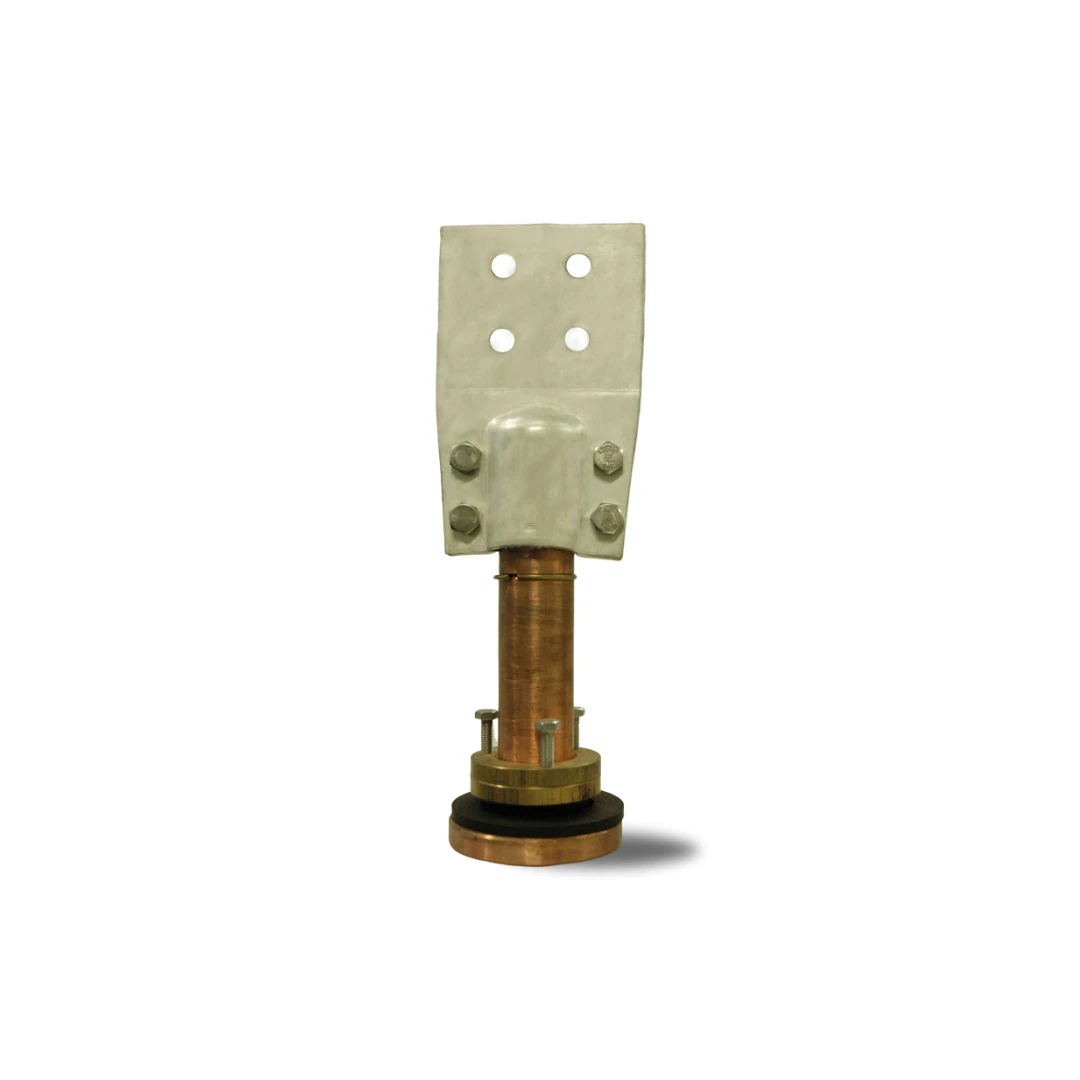
Forged, machined or cast: which to choose
The standards accept all three processes, but they do not deliver the same terminal:
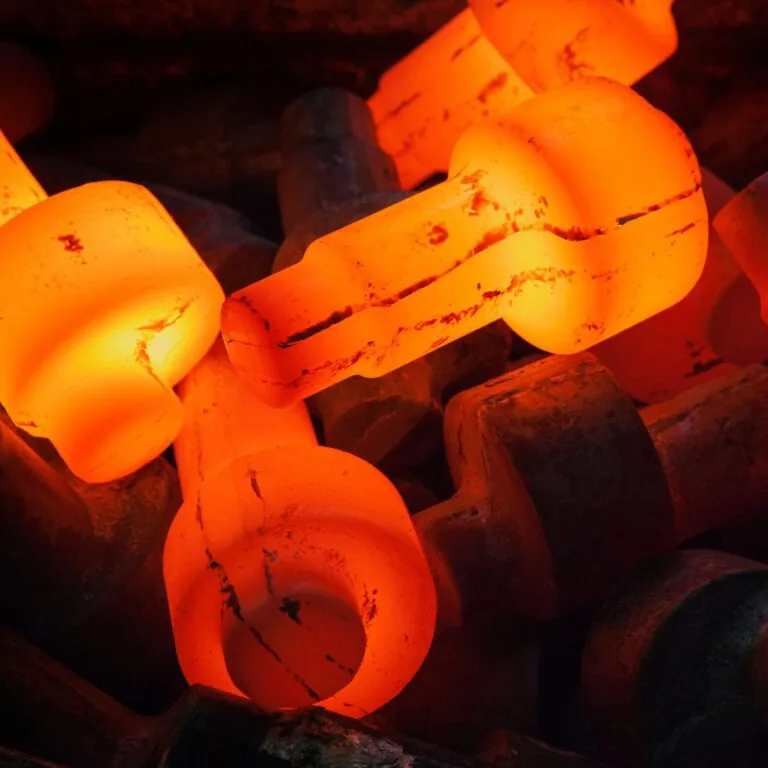
- Forged: dense structure, no porosity, with the metal grain following the shape of the part. This is what keeps conductivity and resistance to tightening torque over the transformer’s life.
- Machined from bar: good for small lots and simple geometries, with more material loss.
- Cast: lower tooling cost, but with a risk of porosity, which reduces conductivity and can create hot spots.
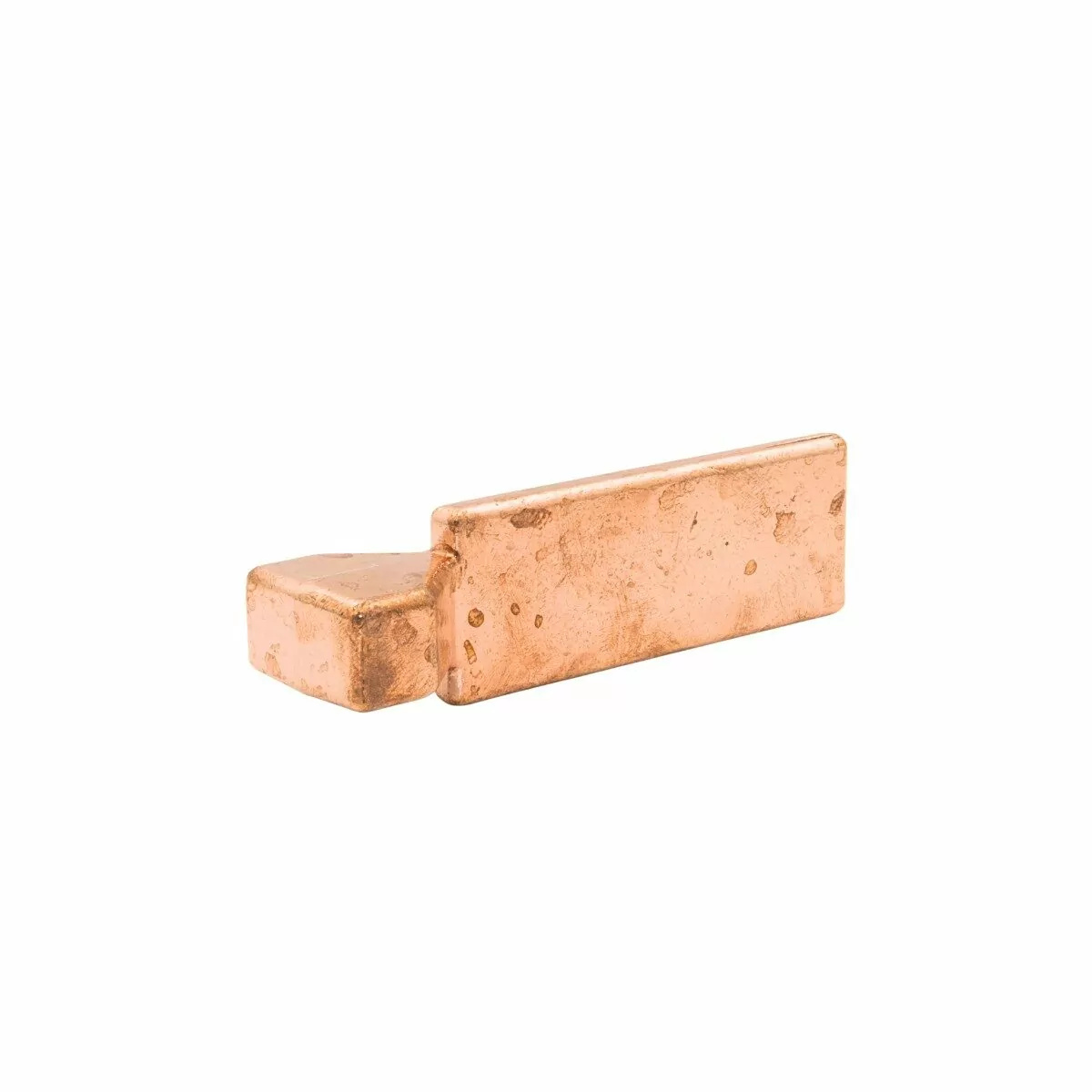
At ITA, terminals are forged. In LV terminals, the head is forged C37700 brass and the stem is C11000 electrolytic copper, the same combination as the standardized NBR 16856 models. HV terminals are forged brass.
Finish: tin or silver
- Tin plating with an 8 µm or 12 µm layer, according to the customer’s specification. 8 µm meets the minimum of both standards.
- Silver plating in various thicknesses, for applications that require lower contact resistance.
Plating thickness is one of the items NBR 16856 asks the manufacturer to state. Include yours in the order.
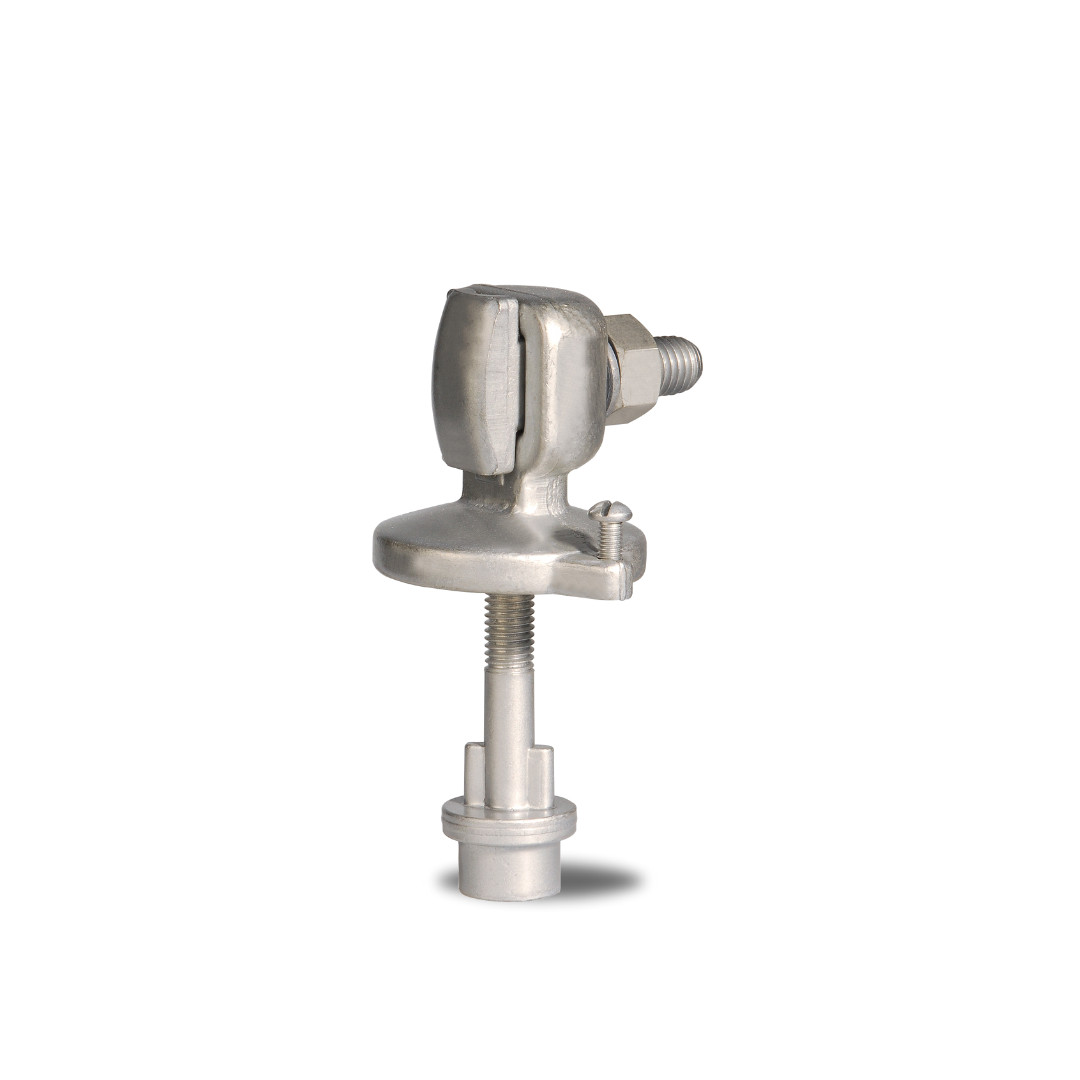
ITA’s terminal and conductor line
| Line | Models |
|---|---|
| HV terminals | 160 A and 400 A, for 15 kV to 36.2 kV bushings |
| LV cable-clamp terminals (T1) | 160 A, 400 A and 800 A |
| LV spade terminals (T2 and T3) | 160 A, 400 A and 800 A |
| LV spade terminals with fittings | 2,000 A, 3,150 A and 5,000 A |
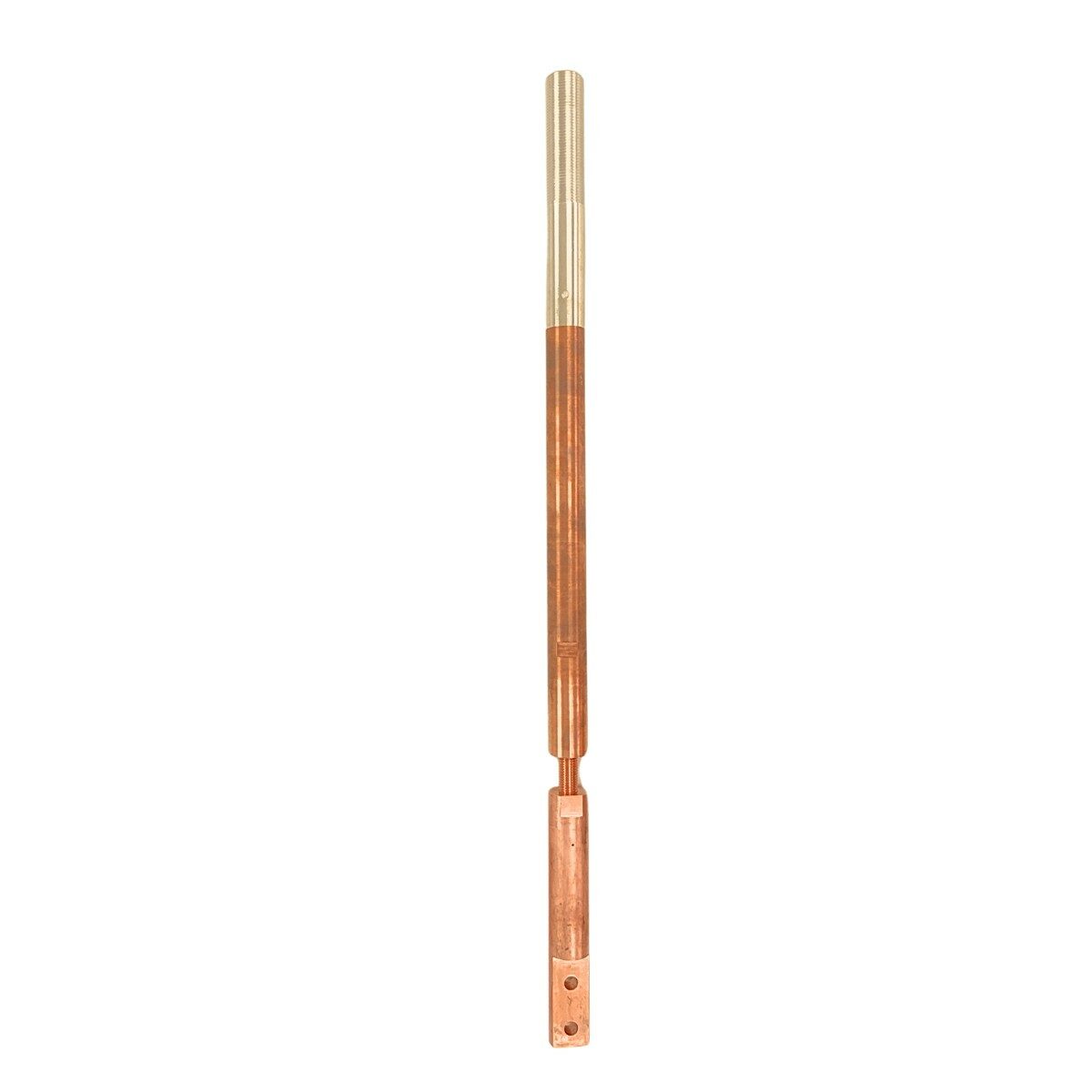
| Bushing conductors | Lower and upper, from 1,000 A to 3,150 A |
| Grounding | Grounding terminal |
We supply whatever the transformer design needs: individual parts or the complete set per transformer, with HV and LV terminals, conductors and grounding.
Testing and quality control
NBR 16856 defines routine tests, carried out by sampling per ABNT NBR 5426, and type tests. Type tests include verification of the terminal material alloy and of the tightening torque the eye can withstand. ITA performs the mandatory tests in its own laboratory, ITALAB, and is certified to ABNT NBR ISO 9001:2015. Learn more about our quality department.
Lead time and delivery scheduling
Ideally, we work with a delivery schedule aligned with the customer’s transformer production. When there is stock, lead time is shorter. Without stock, lead time is 15 to 30 days, depending on quantity and terminal type.
What to include in your quote request
- Rated current and voltage class of the bushing.
- Terminal type: eye, threaded stud, plain stud or flag (spade).
- Number of holes, for spade terminals (NEMA drilling).
- Finish and plating thickness (tin 8 or 12 µm, or silver).
- Drawing or terminal code, if it is a customer standard.
- Annual volume and desired delivery frequency.
Frequently asked questions
Which standard applies to low-voltage bushing terminals?
ABNT NBR 16856:2020, for 1.2 kV bushings from 160 A to 8,000 A in liquid-immersed transformers.
And for high voltage?
ABNT NBR 5435:2015, for 15 kV, 24.2 kV and 36.2 kV bushings up to 160 A.
What is the minimum tin thickness?
8 µm in both standards. NBR 16856 also accepts silver plating with a minimum of 2 µm.
Does a cast terminal meet the standard?
Yes, provided it uses the specified alloys. A forged terminal, however, has no porosity and better maintains conductivity and mechanical strength.
Do you supply the complete kit per transformer?
Yes. We supply individual parts or the complete set, according to the design.
What is the lead time?
Shorter when there is stock. Without stock, 15 to 30 days depending on quantity and model. For continuous supply, we work with delivery schedules.
Request a quote
See our full line of Electrical Terminals for Distribution Transformers or send the models and annual volume to contato@itaindustrial.com.br or through our Contact page.